
Peer Relationships and Social Behaviors in Children
Your Baby Learns Social Behaviors from You
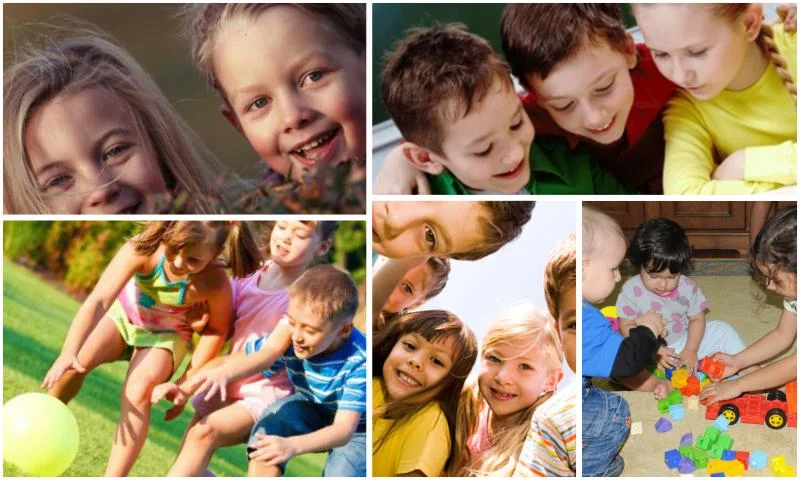
For some reason, forming extended families is less in vogue now. Therefore, our children's opportunity to be with other children within the family is decreasing. Consequently, it is quite normal for our child to need your help while mingling with other children. Especially single children, as they encounter fewer crowds, may feel excessive pressure in social situations. We need to offer options for your child to meet their peers. Thus, your child can develop their social skills in an environment with their age group by comparing themselves with others. The social skills gained in this way become more important during kindergarten or preschool times when you cannot always be by their side. If you are hesitant to say hello and make eye contact with other people, your baby will most likely be shy like you. Instead, if you greet people friendly and are kind to them, your child will observe you and imitate you in their future attempts. Making social behaviors clear for your child and giving small tips on how they should behave can be beneficial for their development. But if you act in the opposite direction of what you say and do not practice what you preach, you should not expect your child to behave as you describe. Avoid environments where parents do not care about children's fights and where running and playing uncontrollably is allowed; in this way, your child may acquire incorrect social behaviors. Children's parks and playgrounds are ideal for running, but environments where groups of children are brought together, such as kindergartens and nurseries, are places where mothers or teachers supervise more, and children can interact with each other while engaging in interesting, calm activities. Having enough toys for everyone in such playgroups prevents children's arguments.