
HOW ARE RAISED FLOOR LEGS USED?
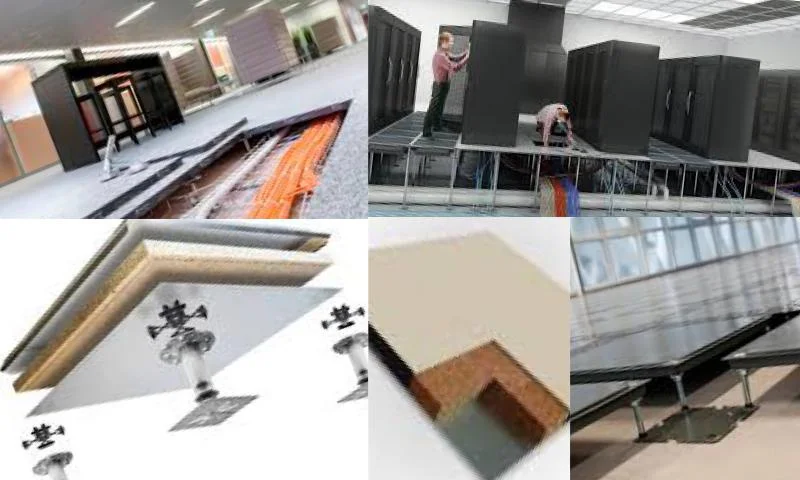
All Service Facilities Circulate Within the Building
Raised floor systems, which provide many advantages in the environments where they are used, allow for the installation of plumbing or cables in the resulting void by restructuring over the existing floor. Since systems like cables and pipes are concealed by the floor systems, an aesthetic appearance is achieved in the environment. The systems, which are also advantageous in terms of decoration with different cladding materials, are used especially in areas with dense cabling due to their electrical discharge properties. Legs are used to raise the floor. Those who want adjustable legs can find solutions to their demands through them. The legs, which have standard dimensions, also have customized options. The systems, which provide easy access to installations such as cables and pipes, are also called raised floors in the industry.
Function of Raised Floor Legs
In a setup where all service facilities can be laid and concealed with raised floor systems, there is no need for construction work for operations such as pipe or electrical relocation. The systems, which save labor, time, and effort, allow for easy intervention in the structures beneath the floor. With raised floor systems, laying cables and pipes on fixed walls becomes a thing of the past. Raised floor legs, preferred for all types of raised floor coverings, allow cables and pipes to be hidden underneath. The systems, which have a wide range of use from server rooms to offices, from data centers to control rooms, are also used in store displays, signaling rooms, educational institutions, and many more areas. Raised floor legs play an important role within the system components. The legs used for raising the floor are produced in a special form to prevent cables from getting tangled. The legs, which have a flexible and modular structure, can be purchased with the system or separately. Products, generally produced from galvanized painted metal, have a modular structure that minimizes height errors.